
Flannel has a reputation for being warm.
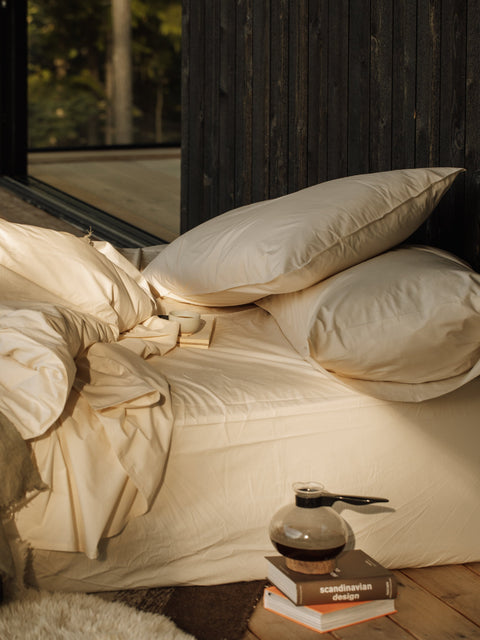
For many people, that is exactly the appeal. When the temperature drops, there is something deeply comforting about climbing into a bed that already feels soft, cozy, and welcoming.
But warmth can quickly become too much of a good thing.
If you are a hot sleeper, share a bed with someone who runs warm, or live in a home where indoor temperatures stay fairly consistent through winter, you may wonder whether flannel sheets will leave you overheated.
The short answer is: good flannel should feel warm, but it should not feel suffocating.
The difference comes down to the fibre, the weight, the construction, and how you layer your bed.
Why do some flannel sheets feel too hot?
Not all flannel is made the same way.
Flannel describes the finish and construction of the fabric more than the fibre itself. Cotton can be made into flannel, but so can polyester and cotton-synthetic blends.
That distinction matters.
Synthetic fibres can trap more heat and moisture close to the body. Cotton, by comparison, is naturally breathable and can allow warmth and moisture to move more easily through the fabric.
Takasa flannel bedding is made from 100% organic cotton in a 185 GSM brushed flannel weave. The result is a fabric designed to provide warmth while remaining breathable rather than relying on synthetic fibres to create insulation.
So, when someone says flannel is “too hot,” the issue may not be flannel itself. It may be the type of flannel they have slept in.

What makes flannel feel warm?
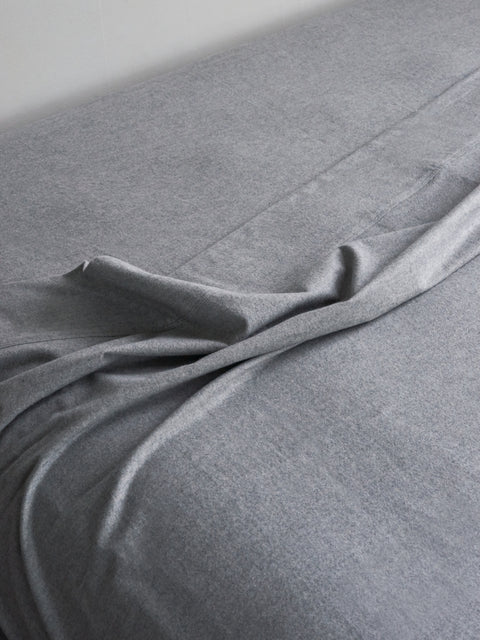
The warmth of flannel comes primarily from its brushed surface.
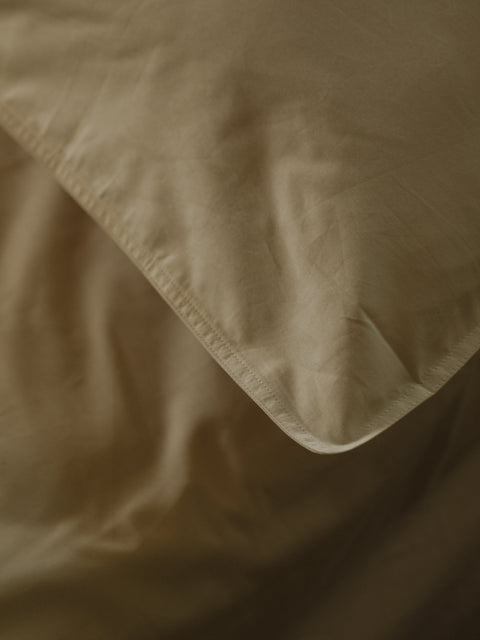
During production, the cotton fabric is gently brushed to lift some of the fibres from the surface. These tiny raised fibres create the soft, slightly fuzzy texture we associate with flannel.
They also help trap small pockets of warm air.
That means flannel can feel warmer against the skin than a smooth cotton weave without needing to become excessively heavy.
This is one of the reasons flannel feels inviting as soon as you get into bed. Rather than waiting for your body to warm cool sheets, the brushed surface feels softer and warmer almost immediately.
For cold nights, that simple difference can make bedtime considerably more comfortable.
Warmth and breathability are not opposites
One of the biggest misconceptions about bedding is that warm fabric must also be stuffy.
That is not necessarily true.
Good bedding should help create a comfortable microclimate around your body. In winter, you want enough insulation to stay warm without trapping so much heat and humidity that you wake up uncomfortable.
Cotton flannel can provide both warmth and airflow.
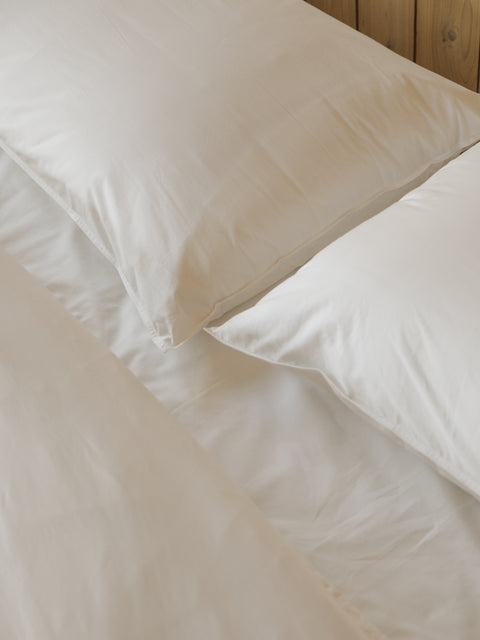
Takasa organic and Fairtrade Cotton flannel bedding uses a 185 GSM plain brushed cotton weave that is warm and breathable. The flannel sheet set is also pre-shrunk and designed to be low-pilling, helping the fabric maintain its feel through repeated use and washing.
That balance is particularly important if you tend to fluctuate between feeling cold when you first get into bed and warm later in the night.
The goal is not simply to create the warmest bed possible.
It is to create a bed that stays comfortable.

Are flannel sheets good for hot sleepers?
They can be.
A hot sleeper does not necessarily need cold bedding throughout the year. During colder months, the right bedding can still feel cozy without creating the clammy, trapped feeling that often causes overheating.
The key is to start with breathable natural materials and avoid over-layering.
If you tend to sleep warm, consider using flannel sheets with a lighter duvet insert rather than combining several heavy insulating layers.
Your bedroom temperature, duvet fill, sleepwear, mattress, and whether you share the bed will all affect how warm you feel.
Flannel is only one piece of the equation.
What does 185 GSM mean in flannel sheets?
Unlike many conventional cotton sheets, flannel is often compared by GSM, or grams per square metre.
GSM measures the weight of the fabric.
Generally, a higher GSM means a heavier fabric. But heavier does not automatically mean better. Extremely heavy flannel may feel substantial but can also be more insulating than some sleepers want.
Takasa flannel is 185 GSM, giving it enough substance to create warmth and softness while still allowing the cotton fibres to breathe.
For most people, that middle ground is more useful than simply choosing the heaviest flannel available.
A winter sheet should feel substantial.
It should not feel like a blanket underneath your blanket.
Cotton flannel vs. synthetic flannel
If overheating is your biggest concern, look at the fibre content before anything else.
A flannel sheet can feel soft on the shelf regardless of whether it is made from cotton or polyester. But those materials behave differently once you sleep in them for several hours.
Cotton is a natural fibre that allows air and moisture to pass through the fabric.
Polyester is a synthetic fibre derived from plastic. It can be durable and inexpensive, but it does not manage heat and moisture in the same way as cotton.
That difference becomes particularly noticeable under a duvet where several layers of fabric are already trapping warmth.
Choosing 100% cotton flannel gives you the cozy brushed feel people love about flannel while maintaining the natural breathability of cotton.
Takasa flannel sheets and duvet covers are made from GOTS-certified organic cotton and Fairtrade Cotton, extending the decision beyond comfort to how the cotton is grown and sourced.
Do you need flannel sheets and a flannel duvet cover?
Not necessarily.
Think of them as two different ways to add warmth to your bed.
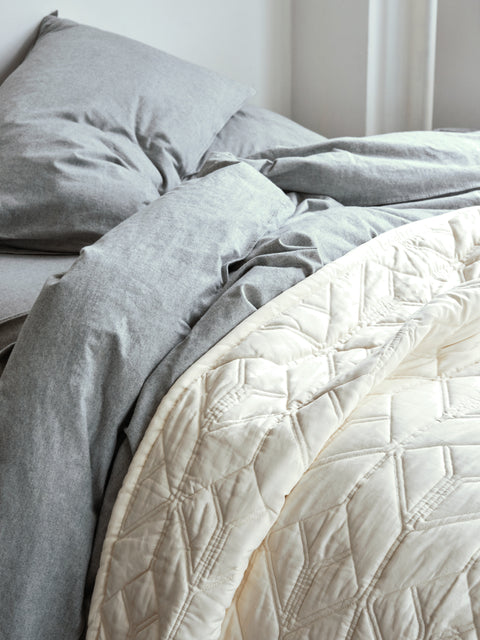
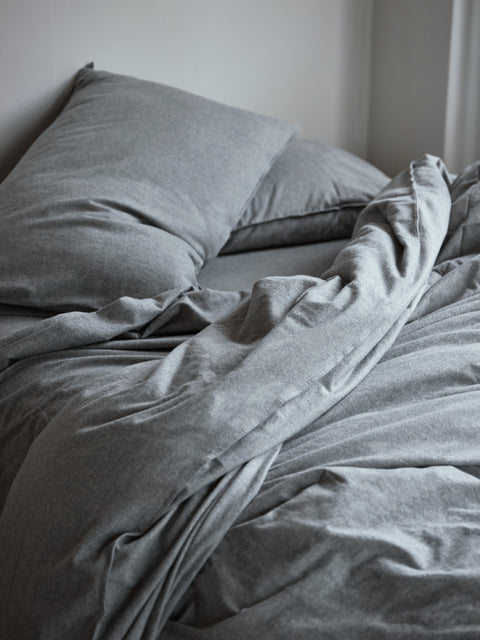
Flannel sheets surround you underneath and directly against the body. A flannel duvet cover adds warmth and softness to the layer above you.
Using both creates the fullest flannel experience and can be particularly comfortable in colder bedrooms.
But you can also mix fabrics.
If you sleep warm, try flannel sheets with a lighter cotton duvet cover.
If you like smooth sheets but want a warmer top layer, use your usual sheets with a flannel duvet cover.
If you sleep cold, combining the two can turn your bed into a particularly cozy winter retreat.
The advantage of building your bed in layers is that you can adapt it to how you actually sleep rather than following one formula for everyone.
How to build a warm bed without overheating
The easiest way to stay comfortable is to think about the whole bed rather than trying to make every individual layer as warm as possible.
Start with the layer closest to your skin.
If you choose flannel sheets, you may not need as heavy a duvet insert as you would with crisp percale sheets.
Next, think about your duvet.
A warm sleeper might pair flannel sheets with a lighter insert. Someone who sleeps cold may prefer a warmer insert and a flannel duvet cover.
You can also add a blanket or throw that can easily be removed during the night. This gives you more flexibility than relying on one very heavy duvet.
And do not overlook the room itself.
A cooler bedroom can allow you to enjoy warmer bedding without overheating, while a bedroom that stays warm overnight may call for lighter layers even in the middle of winter.
Comfort comes from balance.
What makes good flannel sheets?
If you are shopping for flannel, look beyond softness alone.
A few things matter.
First, check the fibre content. Look for 100% cotton if breathability is important to you.
Second, look at fabric weight. GSM gives you a useful indication of how substantial the flannel will feel.
Third, consider whether the fabric is pre-shrunk. Cotton can naturally contract when washed, so pre-shrinking helps provide more predictable sizing over time.
Fourth, consider pilling. Brushed fabrics can develop small fibre balls with use, so a low-pilling construction can help maintain the fabric's appearance and feel.
Finally, look at the details you interact with every night.
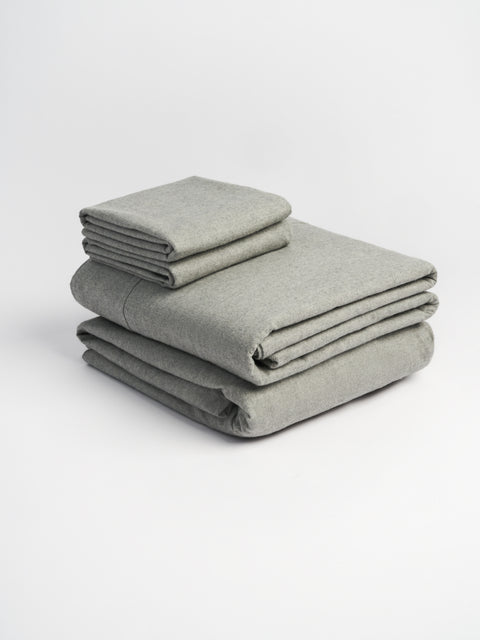
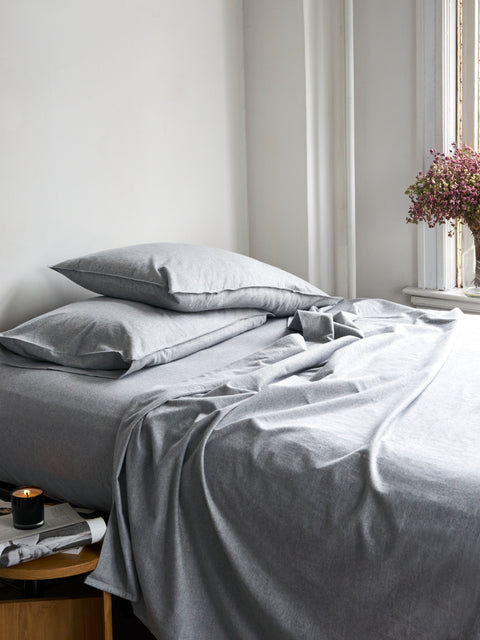
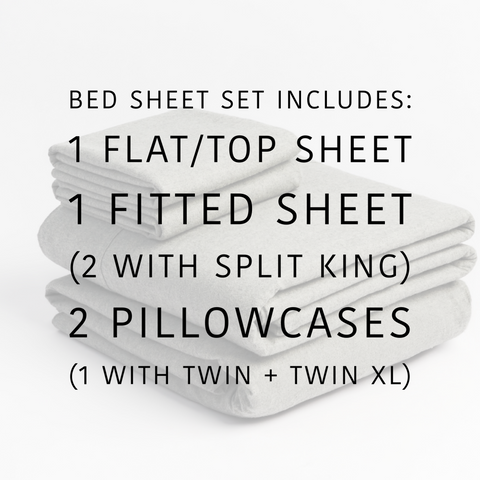
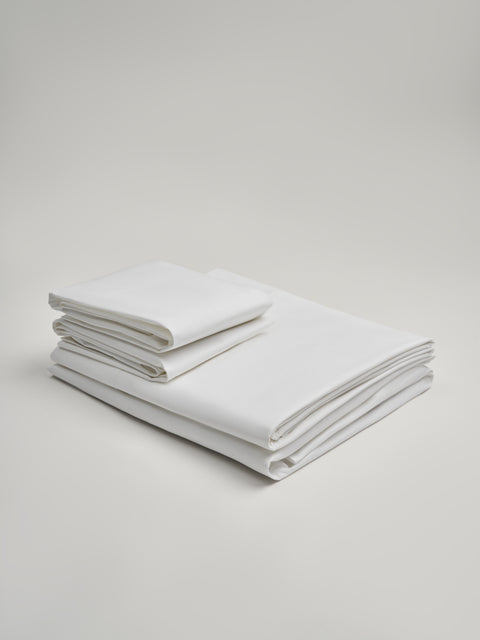
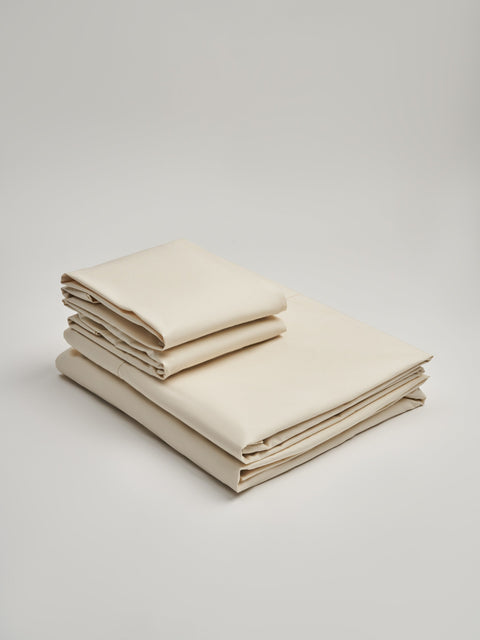
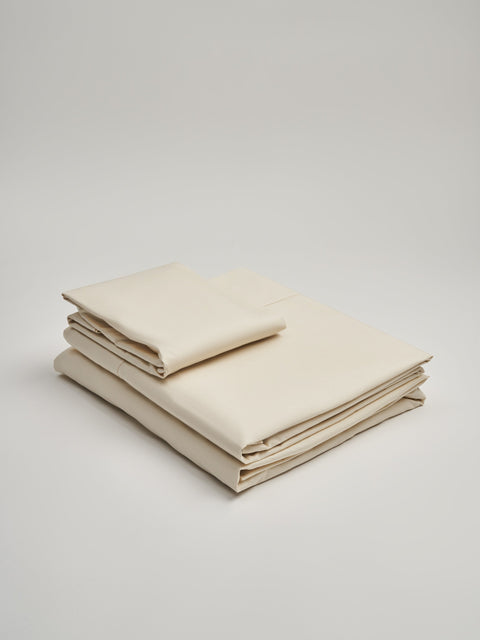
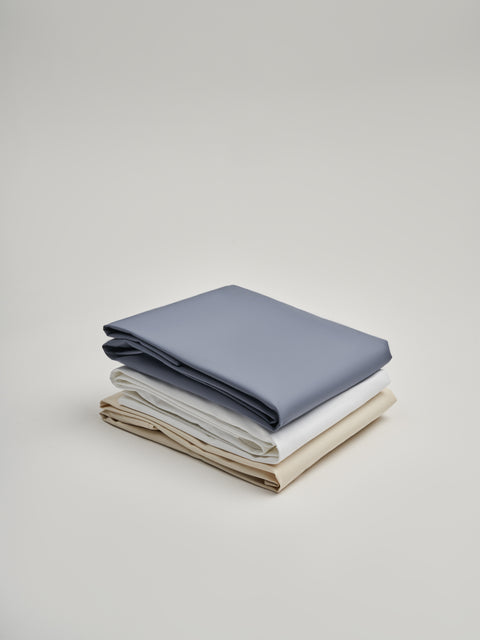
Takasa's Warm + Cozy Flannel Bed Sheet Set includes a fully elasticized fitted sheet with 17-inch deep pockets, pillowcases with an internal envelope enclosure, and double-stitched edges.
Those details do not necessarily stand out in a product photograph.
They become much more important after months of actually sleeping in the sheets.
Why organic cotton matters in flannel bedding
Flannel is bedding you spend hours wrapped in every night.
That makes the material itself worth considering.
Takasa's flannel bedding is made using GOTS-certified organic cotton and Fairtrade Cotton.
For the sleeper, the result is simpler.
You get natural cotton bedding made without relying on synthetic fibres to create warmth.
And you know more about where the material came from and how it moved through the supply chain.
That transparency is part of what makes a better home feel better.
What about a flannel duvet cover?
A flannel duvet cover can be one of the easiest ways to make an existing bed feel warmer for winter.
Because the brushed cotton sits directly above you, it adds that characteristic flannel softness without requiring you to replace your duvet insert.
Takasa's Warm + Cozy Flannel Duvet Cover is made from 100% organic cotton flannel that is pre-shrunk and designed to be low-pilling.
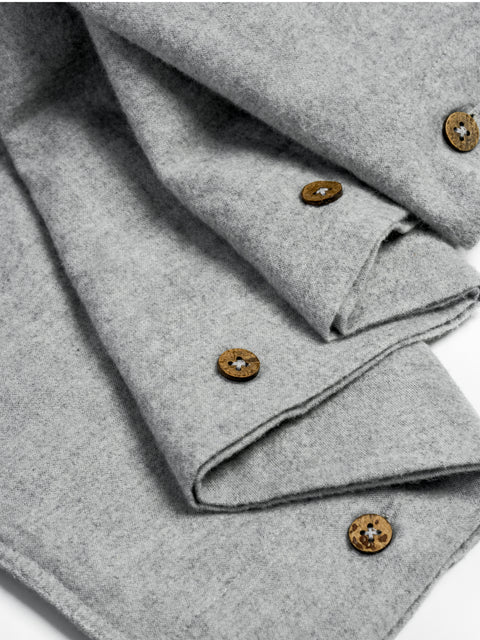
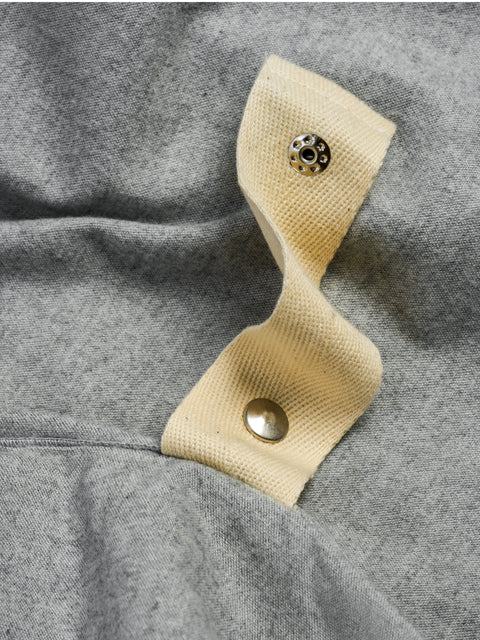
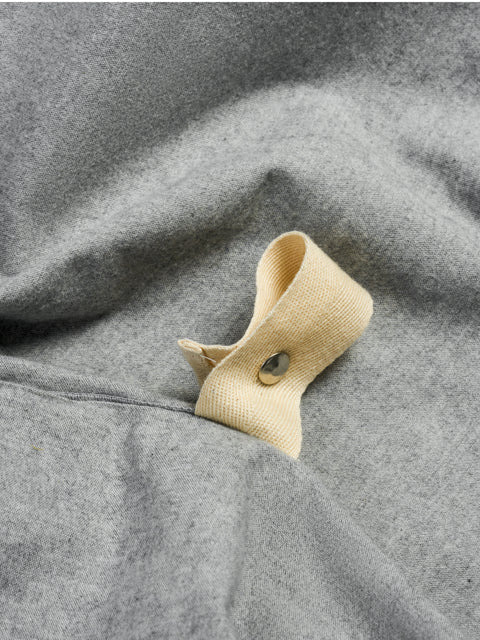
It also includes interior straps and ties to help keep the duvet insert in place, along with an envelope closure and buttons for a clean finish.
That makes a flannel duvet cover particularly useful if you already have an insert you love and simply want to adapt your bed for colder weather.
It is also a good way to experiment with flannel if you are not ready to switch your entire sheet set.
So, are flannel sheets too hot?
They should not be.
The best flannel bedding is not about creating as much warmth as possible. It is about creating the right kind of warmth.
A breathable cotton flannel helps take the chill out of your bed while still allowing heat and moisture to move through the fabric.
If you sleep cold, you can layer it with a warmer duvet.
If you sleep hot, you can pair it with lighter bedding.
And if your temperature changes throughout the night, a well-layered bed gives you room to adjust.
Flannel works best when it is treated as part of your sleep environment rather than simply as the warmest sheet you can buy.
For cold Canadian nights, that balance can make the difference between a bed that feels merely warm and one you genuinely look forward to climbing into.
Warm, breathable, and made from organic cotton, flannel can be cozy without becoming too much.
Frequently Asked Questions
Are flannel sheets breathable?
Yes, cotton flannel can be breathable. The brushed surface helps create warmth, while the natural cotton fibres still allow air and moisture to move through the fabric.
Are flannel sheets good for hot sleepers?
They can be, especially during colder months. Hot sleepers may want to pair cotton flannel sheets with a lighter duvet or fewer bedding layers to maintain a comfortable sleep temperature.
What is a good GSM for flannel sheets?
GSM measures the weight of flannel fabric. Takasa flannel is 185 GSM, which provides warmth and softness without making the bedding excessively heavy.
Are cotton flannel sheets warmer than regular cotton sheets?
Yes. The brushed surface of flannel traps small pockets of warm air, which makes it feel warmer against the skin than smoother cotton weaves such as percale.
Should I use flannel sheets and a flannel duvet cover together?
You can, but you do not have to. Using both creates a warmer, cozier bed. Warm sleepers may prefer flannel sheets with a lighter duvet cover, or regular sheets paired with a flannel duvet cover.
Is organic cotton flannel better?
Organic cotton flannel combines the warmth and softness of brushed cotton with independently verified organic textile standards. Takasa's flannel bedding is made from GOTS-certified organic cotton and Fairtrade Cotton.




Comments (0)
There are no comments for this article. Be the first one to leave a message!